

Sonic AI has positioned itself as an online trading opportunity combining gold-market strategies, automated trade copying, account amplification, and an affiliate compensation programme.
The proposition has attracted attention because of several features presented together: historical trading performance, technology-assisted trading, claims involving 12X and 24X account amplification, and the potential for affiliates to generate commissions through trading activity and network development.
But examining a trading opportunity requires more than reviewing its promotional material.
Prospective customers also need to understand the legal entities involved, the role of the associated broker, the regulatory status of that broker, the risks created by amplified exposure, the actual function of the technology, and the backgrounds of the people promoting the business.
This review examines those areas without making unsupported accusations. Regulatory warnings should not automatically be interpreted as findings of fraud, while historical trading performance should not be mistaken for a guarantee of future returns.
The objective is to identify what is publicly presented, what can potentially be verified, and what questions investors should answer before committing capital.
Understanding the Sonic AI Model
Sonic AI is promoted primarily as a trading proposition with a strong focus on gold, including the XAU/USD market.
Rather than requiring customers to select and execute every trade themselves, the model has been presented around automated trading and trade-copying technology.
The wider ecosystem includes several names:
- Sonic AI
- AITech
- COPYX
- TAG Markets
Alongside the trading proposition is an affiliate programme through which participants may receive compensation connected to trading activity and the development of customer networks.
This creates two separate dimensions to the business.
The first is the trading proposition itself.
The second is the affiliate opportunity, where participants may have financial incentives to introduce customers and generate trading volume.
Understanding both sides is important because the risks, incentives, and claims associated with each are different.
AITech, COPYX and the Technology Layer
AITech has been associated with the technological and affiliate infrastructure surrounding the wider Sonic AI ecosystem.
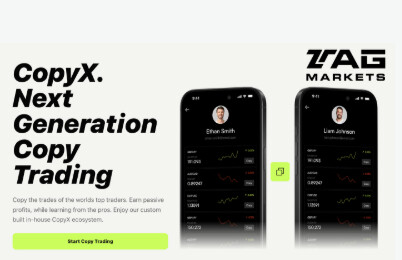
COPYX has been presented as a trade-copying component designed to replicate trading activity across accounts.
Copy trading is a familiar financial-technology concept. A strategy can generate trades in one account, with software subsequently transmitting or reproducing those trades in other accounts.
However, technology alone does not guarantee identical outcomes.
Execution can differ between accounts because of:
- Spreads
- Slippage
- Market liquidity
- Account conditions
- Position sizing
- Broker infrastructure
- Timing
- Trading interruptions
For that reason, customers should understand exactly how the system works rather than assuming that a published strategy account and an individual customer account will perform identically.
Useful questions include:
- Who owns the underlying software?
- Where does the trading signal originate?
- How are trades copied?
- Is the process fully automated?
- Can human traders modify transactions?
- What happens if the copying system fails?
- Who is responsible for technical problems?
- How are differences in account size handled?
There is also a distinction between technical association and legal ownership.
Shared technology, hosting, domains, or software infrastructure may demonstrate operational links between companies. They do not necessarily prove that one company legally owns another.
Corporate filings, contractual documents, and regulatory records are more reliable for determining those relationships.
Examining the Trading Strategy
Gold trading can be highly volatile, making both return potential and risk important considerations.
Sonic AI promotional material has highlighted historical trading results and public trading records as evidence of the strategy's performance.
Platforms such as Myfxbook can provide useful historical information, including returns, drawdowns, account activity, and trading history.
However, historical records must be interpreted within their limitations.
A track record shows what occurred in a particular account under specific circumstances. It does not establish that every customer will experience identical performance.
Actual results can be affected by:
- Execution quality
- Spread differences
- Slippage
- Account size
- Position sizing
- Market conditions
- Trading timing
- Broker conditions
- Technology performance
Consequently, historical profitability should be regarded as historical evidence rather than a promise.
It also does not independently establish claims about how many customers are profitable, how many customers have successfully withdrawn funds, or how large the overall business has become.
Each of those claims requires separate evidence.
What Does the “AI” Component Really Do?
The Sonic AI name naturally raises expectations about the role of artificial intelligence.
That makes understanding the technology especially important.
A genuine AI component could potentially be involved in:
- Analysing market information
- Recognising patterns
- Generating trading signals
- Selecting positions
- Managing risk
- Determining trade sizes
- Monitoring markets
- Supporting execution
But the term “AI” by itself does not explain which functions are actually automated.
Promotional material also refers to professional human traders.
This creates a significant question about the actual operating model.
Is the strategy controlled entirely by software?
Does AI generate recommendations that human traders approve?
Do human traders generate the core signals while technology distributes them?
Or does Sonic AI use a combination of automated systems and human oversight?
Prospective customers should seek a clear explanation of these functions before assuming that the technology operates autonomously.
12X and 24X Account Amplification
Perhaps one of the most important areas to understand is the account-amplification model.
Promotional material has referred to 12X and 24X account amplification.
The terminology can easily be misunderstood.
If a customer deposits $10,000 and the account is described as receiving 24X amplification, the arrangement could potentially provide trading exposure equivalent to $240,000.
That does not necessarily mean the customer has received an additional $230,000 in cash.
Instead, the customer may have access to substantially greater market exposure.
That distinction has major implications for risk.
Greater exposure can magnify gains, but it can also magnify losses.
Before participating, customers should establish:
- What 12X and 24X mean contractually
- Whether the mechanism is leverage, credit, or another arrangement
- Who provides the additional exposure
- How margin is calculated
- What drawdown limits apply
- What triggers liquidation
- What happens when positions move rapidly against the customer
- What fees and financing costs apply
- Whether losses can exceed the original deposit
Customers should also determine whether published historical results were produced using the same amplification conditions that would apply to them.
A low historical drawdown should not automatically be interpreted as proof that a highly amplified customer account cannot experience a much larger loss.
Affiliate Compensation and Network Incentives
Sonic AI also incorporates a network-based affiliate model.
According to the promotional information reviewed, the structure has been described as allocating approximately:
- 70% of trading profits to customers
- 5% to strategy developers
- 25% across ten affiliate levels
The advertised lot-based payments have been described as:
| Level | Advertised amount per lot |
| Level 1 | $2.00 |
| Level 2 | $1.50 |
| Levels 3–4 | $1.00 |
| Levels 5–10 | $0.50 |
If all ten levels qualified, the listed payments would amount to approximately $8.50 per lot.
There have also been promotional references to deposit incentives, beginning at approximately 1% for qualifying direct monthly deposits of $10,000 and increasing to around 5% at approximately $1 million in qualifying deposits.
The precise qualification requirements and calculation methodology should be checked against the current compensation documentation.
Additional promotional rewards have reportedly included leadership pools, luxury watches, travel benefits, and a claimed $1.2 million family-home reward.
These should be regarded as advertised incentives unless independently verified.
Why the Affiliate Structure Matters
An affiliate programme can introduce incentives that are separate from the performance of the underlying trading strategy.
If an affiliate earns compensation based on customer acquisition, deposits, trading volume, or network activity, that person may have a financial reason to encourage others to participate or increase their trading activity.
That fact does not automatically make the programme illegitimate.
It does mean customers should evaluate promotional statements carefully.
For example, a verified trading record and an affiliate's income presentation are fundamentally different forms of evidence.
Prospective participants should distinguish between:
- Verified trading information
- Company documentation
- Regulatory records
- Affiliate marketing claims
- Testimonials
- Lifestyle content
- Income projections
- Recruitment presentations
The existence of an incentive should not be confused with independent proof of profitability.
TAG Markets and the Brokerage Relationship
TAG Markets occupies an important position in the Sonic AI model because it is presented as the associated broker.
The broker therefore deserves separate due diligence.
Customers should identify the exact legal entity operating under the TAG Markets name rather than relying only on branding.
Key questions include:
- Where is the entity incorporated?
- Which regulator supervises it?
- What licence does it hold?
- What services is it authorised to provide?
- Which jurisdictions can it serve?
- Where are customer funds held?
- Are funds segregated?
- What investor protections apply?
- What happens if the company becomes insolvent?
The answer to these questions can vary depending on the customer's country and the specific legal entity involved.
TAG Markets Regulatory Warnings
Regulatory history is one of the most significant areas requiring attention.
The material supplied for this investigation refers to an Austrian Financial Market Authority warning involving TAG Markets, T.M. Financial Ltd, TAG Markets Ltd, and tagmarkets.com.
The reported issue concerned the provision of regulated securities-related services in Austria without the required authorisation.
The supplied information also states that the warning was referenced by regulatory authorities in other European jurisdictions, including Spain's CNMV and Norway's Finanstilsynet.
A separate warning concerning tagmarkets.com has also been associated with Luxembourg's CSSF.
These warnings are significant because regulatory authorisation can affect whether a broker is permitted to provide particular financial services to customers in a particular jurisdiction.
However, it is essential not to overstate what a warning establishes.
A regulatory warning about authorisation is not automatically a finding of fraud.
It may instead concern whether an entity was properly authorised to perform a particular regulated activity in a particular country.
Therefore, anyone evaluating TAG Markets should review the original regulator notices and establish:
- Which legal entity was named.
- What services were addressed.
- Which jurisdiction was involved.
- When the warning was issued.
- What regulatory status applied at that time.
- Whether the situation has subsequently changed.
Current official regulatory records should be consulted rather than relying exclusively on historical articles or promotional responses.
Country Restrictions and Customer Eligibility
International brokerage arrangements also create questions about geographical eligibility.
TAG Markets has published restrictions concerning certain countries and jurisdictions.
That becomes particularly relevant if an affiliate tells a prospective customer that an alternative registration method can overcome a country restriction.
Customers should not assume that such advice represents the official position of the broker.
The appropriate approach is to obtain confirmation directly from the brokerage regarding:
- Whether the customer is eligible
- Which legal entity will provide the account
- Which jurisdiction governs the relationship
- What regulatory protections apply
- Whether deposits are accepted
- Whether withdrawals are available
- Whether any country-specific restrictions apply
This is especially important for customers located in countries with their own financial-services requirements.
Vitaliy Dubinin: What Investors Should Consider
Vitaliy Dubinin has been prominently associated with Sonic AI promotion.
Researching the background of a prominent promoter is a reasonable part of due diligence.
Previous involvement in online business ventures can provide context regarding someone's commercial history and the types of opportunities they have promoted.
However, historical involvement should not automatically be interpreted as evidence of misconduct in Sonic AI.
A previous business and a current business may have entirely different structures.
The appropriate approach is therefore to consider promoter history alongside current documentation rather than treating it as conclusive evidence.
Paulo Barroso and His Business Background
Paulo Barroso has also played a visible promotional role in connection with Sonic AI.
Public profiles have described him as an entrepreneur, marketer, speaker, affiliate, and cryptocurrency investor.
The background material reviewed for this article associates him with previous programmes including:
- Empower Network
- Digital Altitude
- Forsage
- Safir/ZeniQ
- HEAL Worldwide
- E1U Life
- Legacy Builders
Some of these programmes have subsequently been associated with regulatory scrutiny, allegations, or controversy.
That information may be relevant when a prospective customer evaluates the people promoting a current opportunity.
However, it should not be transformed into an unsupported allegation about Sonic AI.
Previous association does not prove that the current business is fraudulent, nor does it establish wrongdoing by Barroso in relation to Sonic AI.
It is simply one piece of background information that investors may wish to consider.
Corporate Transparency
The number of entities associated with the Sonic AI ecosystem makes corporate transparency especially important.
A customer should be able to understand the entire path of their money and trading activity.
Ideally, documentation should make it clear:
- Which company markets the opportunity
- Which company operates the trading strategy
- Which company supplies technology
- Which company provides the broker account
- Which company receives deposits
- Which entity controls withdrawals
- Which company pays affiliate commissions
- Which entity is legally responsible for customer complaints
Without this information, it can be difficult to determine where responsibility lies if a dispute or operational problem occurs.
Where Is the Customer's Money?
One of the most basic due-diligence questions is also one of the most important:
Where is the customer's money held?
The existence of an online dashboard does not, by itself, answer that question.
Customers should determine:
- Who receives the deposit
- Where the money is held
- Whether funds are segregated
- Who has authority over the funds
- How withdrawals are processed
- What restrictions apply
- What protections exist if the broker fails
- What happens if the technology provider stops operating
- Which legal entity handles disputes
This information should be obtained before making assumptions about the safety of deposited capital.
Trading Risk Versus Business Risk
It is useful to distinguish between two categories of risk.
Trading Risk
This includes the possibility of losing money because of:
- Market movements
- Leverage
- Amplification
- Volatility
- Slippage
- Poor execution
- Strategy failure
Business and Counterparty Risk
This includes the possibility of problems arising from:
- Broker insolvency
- Technology failure
- Withdrawal restrictions
- Regulatory intervention
- Corporate disputes
- Operational failures
- Changes in jurisdictional eligibility
A customer can therefore face meaningful risk even if the underlying strategy itself has historically performed well.
What the Public Information Does Not Establish
The available material provides useful information about how Sonic AI is promoted, but several important questions remain separate.
Public information does not automatically establish that:
- Every customer receives the advertised returns
- Historical performance will continue
- Amplified accounts cannot experience severe losses
- All customers receive identical execution
- Customer funds are protected equally in every jurisdiction
- Every promotional reward has been delivered as advertised
- Every corporate relationship is transparent
- Every customer is legally eligible
- Regulatory concerns have been resolved
- Affiliate income claims represent typical outcomes
These points should be independently verified rather than inferred from marketing material.
A Practical Checklist for Prospective Participants
Anyone considering Sonic AI should seek answers to the following questions.
Legal and Regulatory
- What is the exact legal entity behind the trading service?
- Which entity contracts with customers?
- Which regulator supervises that entity?
- What activities is it authorised to perform?
- Does that authorisation cover the customer's country?
- Are there current regulatory warnings or restrictions?
Trading Strategy
- What markets are traded?
- How are trading decisions generated?
- What role does AI actually play?
- What role do human traders play?
- Can the historical trading record be independently verified?
- What has been the maximum drawdown?
- Can customer execution differ from the published account?
Amplification
- What does 12X or 24X actually provide?
- Who supplies the additional exposure?
- How is margin calculated?
- What causes liquidation?
- What is the maximum possible loss?
- Can losses exceed the initial deposit?
- What costs are associated with the amplified account?
Customer Funds
- Which entity receives deposits?
- Where are funds held?
- Are customer funds segregated?
- Who processes withdrawals?
- What protections apply if the broker fails?
- Which country's laws govern the customer agreement?
Affiliate Model
- How are commissions calculated?
- Are payments linked to deposits, lots, profits, recruitment, or network activity?
- What qualification conditions apply?
- Can affiliates benefit from higher customer trading volume?
- Can promotional rewards be independently verified?
Promoter Backgrounds
- What previous businesses have the key promoters been involved with?
- Have previous ventures faced regulatory scrutiny?
- Which current claims can be independently documented?
- Are promotional statements supported by primary evidence?
Overall Assessment
Sonic AI combines several elements that can be attractive to prospective participants: gold trading, automated trade copying, historical performance claims, amplified exposure, and an affiliate compensation structure.
But each element also requires careful examination.
The trading record should be evaluated as evidence of historical performance rather than a guarantee.
The AI claims should be examined by determining precisely what technology does and where human traders remain involved.
The 12X and 24X model should be understood in terms of actual exposure, margin requirements, liquidation rules, and potential losses.
The affiliate system should be assessed separately because commissions may create incentives connected to customer acquisition and trading volume.
Most importantly, the regulatory position of TAG Markets and the exact legal entities involved should be verified through current official sources.
Conclusion
Whether Sonic AI is suitable for a particular customer cannot be determined simply by looking at promotional returns or applying a binary “legitimate versus illegitimate” label.
A meaningful assessment requires several independent checks.
Prospective customers should establish who operates each part of the ecosystem, who holds their money, which regulator oversees the relevant entity, whether the service is authorised in their jurisdiction, how amplified exposure works, and what happens if the trading strategy experiences substantial losses.
The regulatory warnings associated with TAG Markets are an important part of that assessment, but they should be interpreted according to the exact wording, entities, jurisdictions, and dates involved rather than being presented as automatic proof of fraud.
The backgrounds of Vitaliy Dubinin and Paulo Barroso can provide additional context, but historical business associations should likewise not be treated as proof of misconduct in Sonic AI.
Ultimately, the strongest protection for a prospective customer is independent verification.
Returns, testimonials, social-media presentations, lifestyle claims, affiliate success stories, and promotional rewards should not replace examination of legal documentation, regulatory status, customer-fund arrangements, trading risks, and withdrawal procedures.
The key question is not simply whether Sonic AI looks attractive. It is whether the underlying claims, structure, safeguards, and risks can be independently verified.
Methodology and Disclaimer
This review is based on publicly available material, including company and promotional websites, published trading information, regulatory publications, archived material, social-media content, domain-related information, and other open-source sources.
No private systems were accessed, and no unauthorised or confidential information was used.
Regulatory warnings, allegations, disputes, and historical controversies are described with appropriate qualification. They should not automatically be interpreted as established fraud, criminal activity, or wrongdoing.
Business structures, regulatory permissions, trading arrangements, and compensation plans can change. Readers should therefore verify current information directly with the relevant companies and financial regulators before making financial decisions.
This article is provided for informational and due-diligence purposes only. It is not financial, investment, legal, or tax advice.
Trading with leverage or amplified exposure carries substantial risk. Past performance does not guarantee future results, and anyone considering participation should understand the potential for loss before committing funds.
