

Modern supply chains are complex, fast-moving systems that connect manufacturers, warehouses, retailers, and customers across vast distances. Behind every online purchase or store delivery is a carefully coordinated logistics process designed to move goods efficiently from origin to destination.
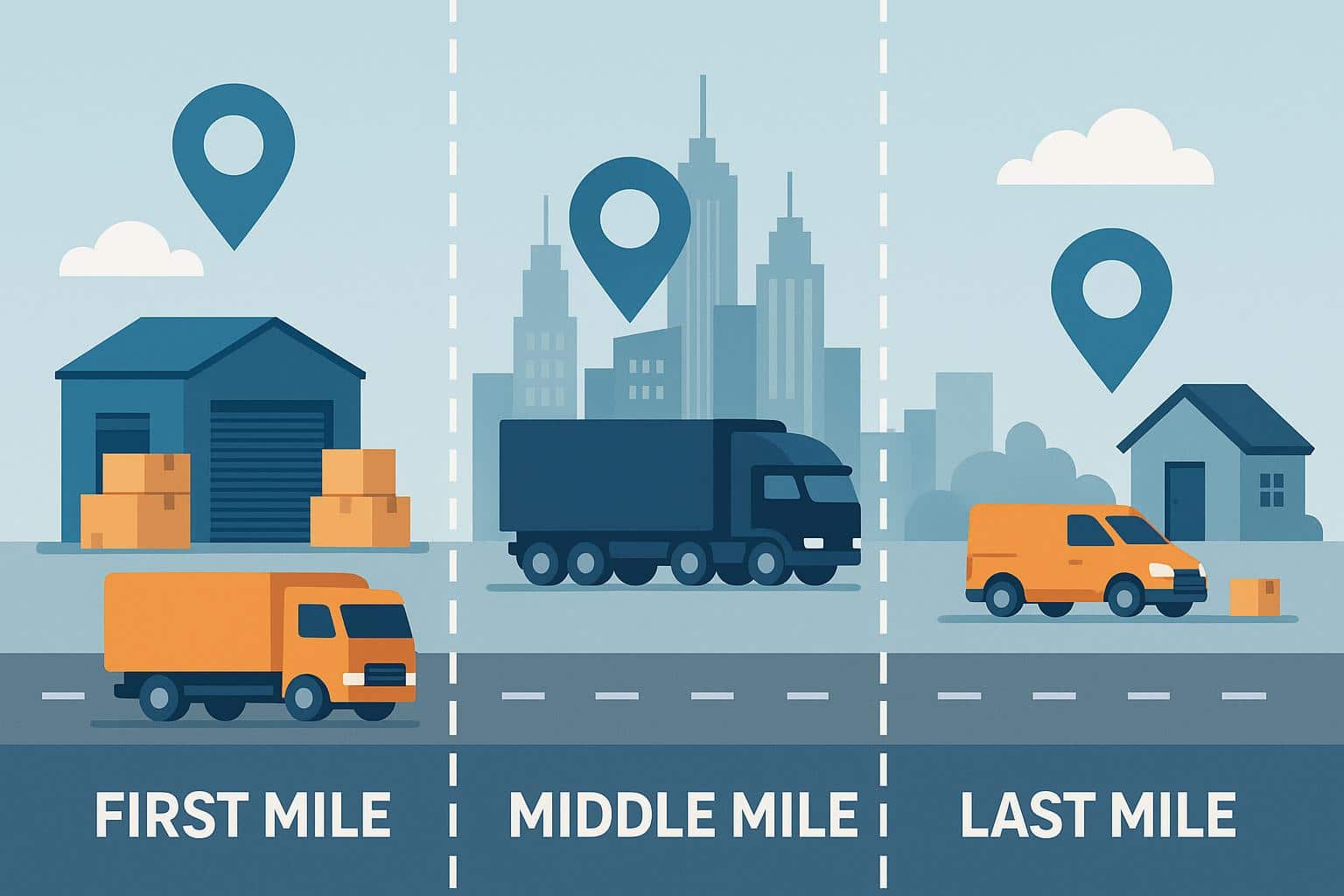
Understanding the different stages of logistics can help businesses optimise their operations, improve delivery speed, and reduce costs. Three key stages define the journey of most goods: first mile, middle mile, and last mile logistics.
Each stage plays a distinct role in the movement of products through the supply chain. By understanding how they work together, businesses can build stronger, more resilient logistics strategies.
Early in this process, companies often begin exploring questions like what is last mile logistics and how it impacts delivery performance. However, last mile delivery is only one part of a much broader logistics ecosystem that starts long before products reach customers.
What Is First Mile Logistics?
First mile logistics refers to the initial stage of the supply chain, where goods are transported from their point of origin to the first distribution hub or processing centre. In most cases, this involves moving products from:
- Manufacturers
- Suppliers
- Farms or production facilities
- Import terminals or ports
…to a warehouse, fulfilment centre, or distribution facility.
Example of First Mile Logistics
Imagine an electronics manufacturer producing devices in a factory. Once the products are packaged and ready for shipment, they must be transported to a regional warehouse. That journey from the factory to the warehouse represents the first mile.
This stage focuses heavily on:
- Collecting goods from production sites
- Packaging and preparing items for transport
- Initial transportation to logistics hubs
- Inventory intake and processing
Efficient first mile logistics is critical because delays here can affect the entire downstream supply chain.
Challenges in First Mile Logistics
Businesses often encounter several obstacles during the first mile stage:
- Coordinating pickup schedules
- Managing production timelines
- Handling international freight and customs processes
- Ensuring goods arrive safely at distribution centres
When properly managed, first mile logistics ensures products enter the supply chain smoothly and are ready for broader distribution.
What Is Middle Mile Logistics?
The middle mile refers to the movement of goods between warehouses, distribution centres, or fulfilment hubs before they are sent out for final delivery. This stage often involves long-distance transportation and serves as the backbone of national and regional logistics networks.
Key Functions of the Middle Mile
Middle mile logistics typically includes:
- Transporting bulk shipments between distribution centres
- Consolidating goods for regional distribution
- Rebalancing inventory between warehouses
- Preparing shipments for final delivery
For example, a retailer may transport goods from a central warehouse in Sydney to regional fulfilment centres in Melbourne, Brisbane, and Perth. That transportation process forms part of the middle mile.
Why the Middle Mile Matters
While the middle mile receives less attention than last mile delivery, it plays a crucial role in ensuring supply chains remain efficient. A well-optimised middle mile network allows businesses to:
- Reduce delivery times
- Position inventory closer to customers
- Improve distribution efficiency
- Lower transportation costs
Many large retailers and logistics companies invest heavily in middle mile infrastructure because it directly impacts delivery speed and scalability.
What Is Last Mile Logistics?
Last mile logistics is the final stage of the delivery process, where goods travel from a local distribution centre to the end customer. This is the step most visible to consumers because it represents the moment when orders finally arrive at homes or businesses.
Common Last Mile Delivery Methods
Last mile deliveries may involve:
- Delivery vans and trucks
- Courier services
- Parcel lockers
- Bike couriers in urban areas
- Click-and-collect retail pickups
With the rapid growth of eCommerce, last mile logistics has become one of the most important and challenging components of modern supply chains.
Why Last Mile Is So Complex
Although the distance travelled in the last mile is often short, it is frequently the most expensive and operationally demanding stage of logistics. Several factors contribute to this complexity:
- Multiple delivery destinations
- Traffic and urban congestion
- Failed deliveries or missed drop-offs
- Customer expectations for fast shipping
Because of these challenges, businesses constantly explore ways to improve routing efficiency, delivery scheduling, and real-time tracking.
How the Three Stages Work Together
First mile, middle mile, and last mile logistics form a continuous chain that moves goods from production to customers. Here is how they typically connect:
- First Mile – Goods leave the manufacturer or supplier and travel to a distribution hub.
- Middle Mile – Products move between warehouses or fulfilment centres across regions.
- Last Mile – Items are delivered to the final customer or retail location.
Each stage must operate efficiently to maintain a smooth supply chain. A delay or disruption in any part of the process can create ripple effects across the entire delivery network.
Why Businesses Need to Optimise All Three Stages
Many organisations focus heavily on last mile delivery because it directly affects customer experience. However, true logistics efficiency requires optimisation across all three stages. Businesses that improve first mile and middle mile logistics can achieve:
- Faster delivery times
- Reduced transportation costs
- Better inventory positioning
- Greater supply chain resilience
For example, by placing inventory closer to customers during the middle mile stage, companies can significantly reduce last mile delivery times.
Technology Is Transforming Modern Logistics
Advances in logistics technology are helping businesses manage these stages more effectively. Key innovations include:
- Real-time shipment tracking
- AI-powered route optimisation
- Automated warehouse systems
- Data-driven demand forecasting
- Integrated logistics platforms
These tools allow logistics providers to coordinate complex supply chains while maintaining transparency and efficiency.
The Future of First, Middle, and Last Mile Logistics
As eCommerce continues to grow and customer expectations rise, logistics systems will continue to evolve. Future developments may include:
- Increased automation in warehouses
- Electric and autonomous delivery vehicles
- Micro fulfilment centres closer to urban customers
- More advanced supply chain analytics
Businesses that understand how first mile, middle mile, and last mile logistics interact will be better positioned to build efficient and scalable delivery networks.
Final Thoughts
The journey of a product from factory floor to customer doorstep involves multiple coordinated steps. First mile, middle mile, and last mile logistics each play a vital role in ensuring goods move smoothly through the supply chain.
While last mile delivery often receives the most attention, the entire system must work together to achieve reliable, cost-effective distribution.
By understanding the differences between these stages and how they interconnect, businesses can optimise logistics strategies, improve customer satisfaction, and build stronger supply chains for the future.
