

Attorney and government affairs professional Martin J. Milita has spent decades working with public and private sector clients on environmental, regulatory, and operational matters. His experience includes leadership roles with Fiore Group Companies, where he oversaw solid waste collection, transfer, and transport operations across multiple New Jersey counties, as well as advisory and lobbying work through Duane Morris Government Strategies and Holman Public Affairs. Throughout his career, he has assisted clients with environmental permits, government relations, business development, and crisis management involving infrastructure and waste-related projects. His background in administrative and environmental law, combined with operational oversight experience, provides practical insight into the planning, permitting, and operational considerations involved in opening a waste transfer or recycling facility.
Things to Know Before Opening a Waste Transfer or Recycling Facility
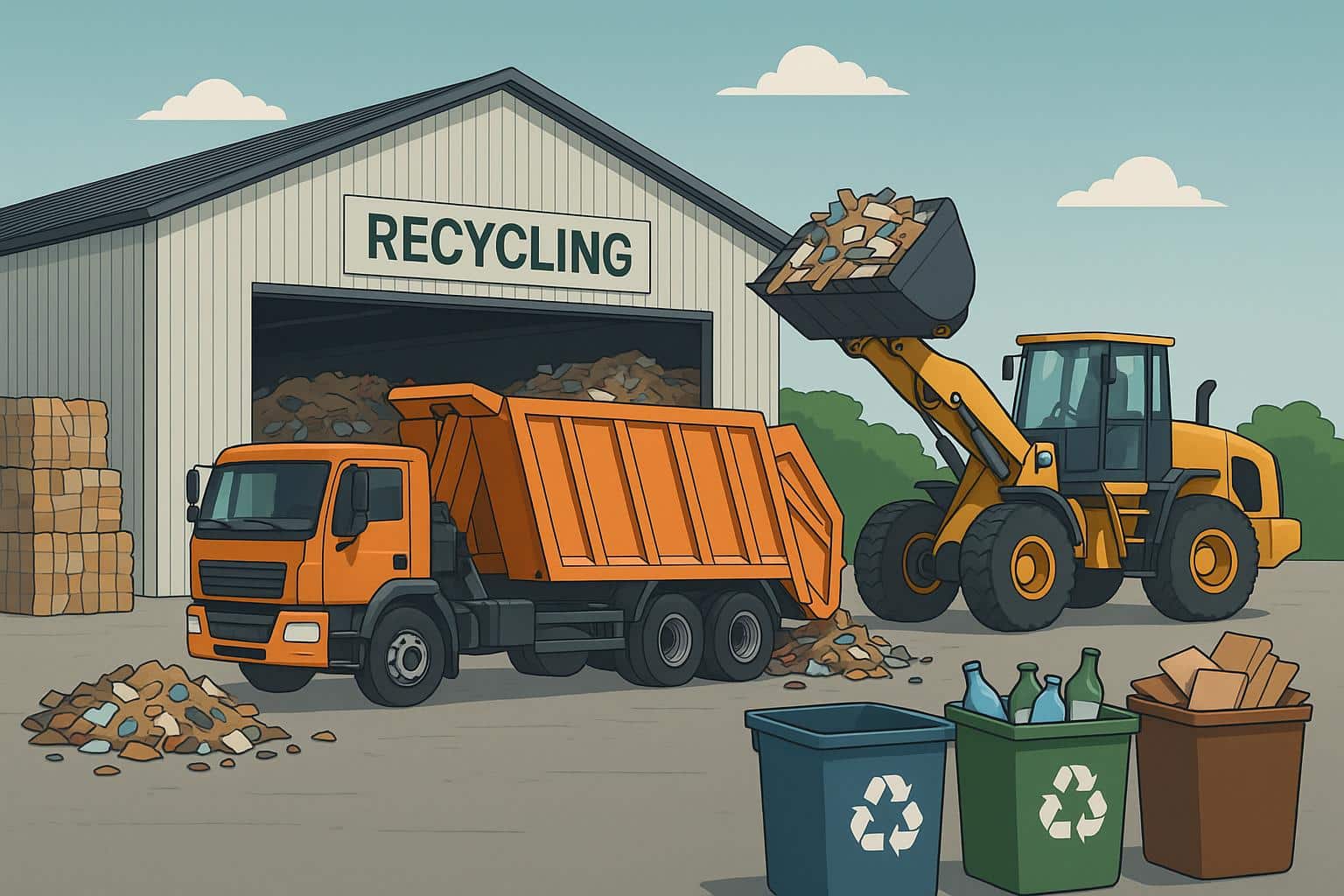
A waste transfer or recycling facility receives material, sorts, stores, or processes it, and then sends it to another destination for disposal or further handling. That can look like a simple business setup when a site seems available, and demand appears strong. In practice, the harder question is whether the property, permit path, and operating plan can work together. Before seeking approvals, a project owner needs to test that fit.
The first test is usually the property itself. A parcel may look large enough on a map and still fail when planners look more closely at truck access, turning space, queueing room, and internal circulation. A site with enough acreage can still force unsafe truck movement or leave no room for vehicles to wait on site.
A state environmental agency may control the main solid-waste approval, while local officials may review zoning, layout, construction details, fire safety, or related site conditions. In simple terms, a permit gives formal approval to build or operate if the project meets stated requirements.
The review process can also take longer than many first-time applicants expect. Some projects go through notice requirements, public hearings, written comments, or other formal review steps before officials make a final decision. Even a sound business case can lose momentum if the review record is incomplete or the proposal needs revision.
Local impacts often shape the debate more than the facility concept itself. Nearby residents and local officials may focus on truck traffic, odor, dust, noise, on-site queueing, and operating hours because those are the effects they expect to notice directly. Reviewing bodies may also attach conditions tied to those issues. A project plan needs specific answers early, not assurances that the details will be solved later.
The inside of the facility needs just as much planning as the property line. The operator has to think through unloading areas, separation space, equipment movement, employee safety zones, and enough room to keep material moving without backups. A permit may allow a site to open, but it does not make the layout efficient.
Once the facility opens, the operator may need to inspect incoming loads, track what materials the permit allows the site to accept, keep records, and document whether daily activity stays within approved conditions. Regulators and inspectors compare those records to activity on the ground. That makes routine documentation a core operating duty, not side paperwork.
Money and timing can change the decision even after the concept looks sound. Permit fees, design revisions, added traffic controls, site improvements, and hearing-related delays can push the opening farther out and raise costs beyond early estimates. A project owner may start with a reasonable budget and still find that the numbers no longer work after conditions and revisions are added.
The site has to support real operations, the layout has to match daily movement, and the proposal has to answer predictable local objections before boards or agencies force changes. That coordination cannot remove every risk, but it can prevent late redesign after money has already been spent.
Many waste and recycling projects do not fail because the service lacks value. They fail because the owner reaches formal review before proving that trucks can move safely, operations can stay under control, and local concerns have realistic answers. A careful pre-opening review helps identify those weak points before they turn into redesign, delay, or a site that never opens as planned.
About Martin J. Milita
Martin J. Milita is an attorney and government affairs professional with experience in environmental law, solid waste operations, and public policy. He has served in leadership and advisory roles with Fiore Group Companies, Holman Public Affairs, and Duane Morris Government Strategies. His work has included environmental permitting, government advocacy, crisis management, and operational oversight for clients in the public and private sectors, including organizations involved in waste transfer, recycling, and infrastructure projects.
