

Simone Monasebian brings a rare interdisciplinary perspective to discussions of culture, law, and social change. Before building a distinguished legal and human rights career, she worked as an East Coast correspondent for a nationally syndicated radio program, where she was among the first journalists to document hip hop as it emerged into public consciousness. That early reporting experience placed Simone Monasebian at the intersection of music, youth expression, and broader social movements that shaped late twentieth century America. Her subsequent work as a criminal defense attorney, international prosecutor, principal defender, and legal analyst reflects a sustained engagement with issues of justice, identity, and marginalized voices. Now serving as Chief Program Officer for Sanctuary for Families in New York City, she continues to focus on systems, communities, and narratives that influence social outcomes. This background provides a grounded framework for examining hip hop not simply as a musical genre, but as a cultural response to historical conditions, political struggle, and creative innovation.
The Evolution of Hip Hop
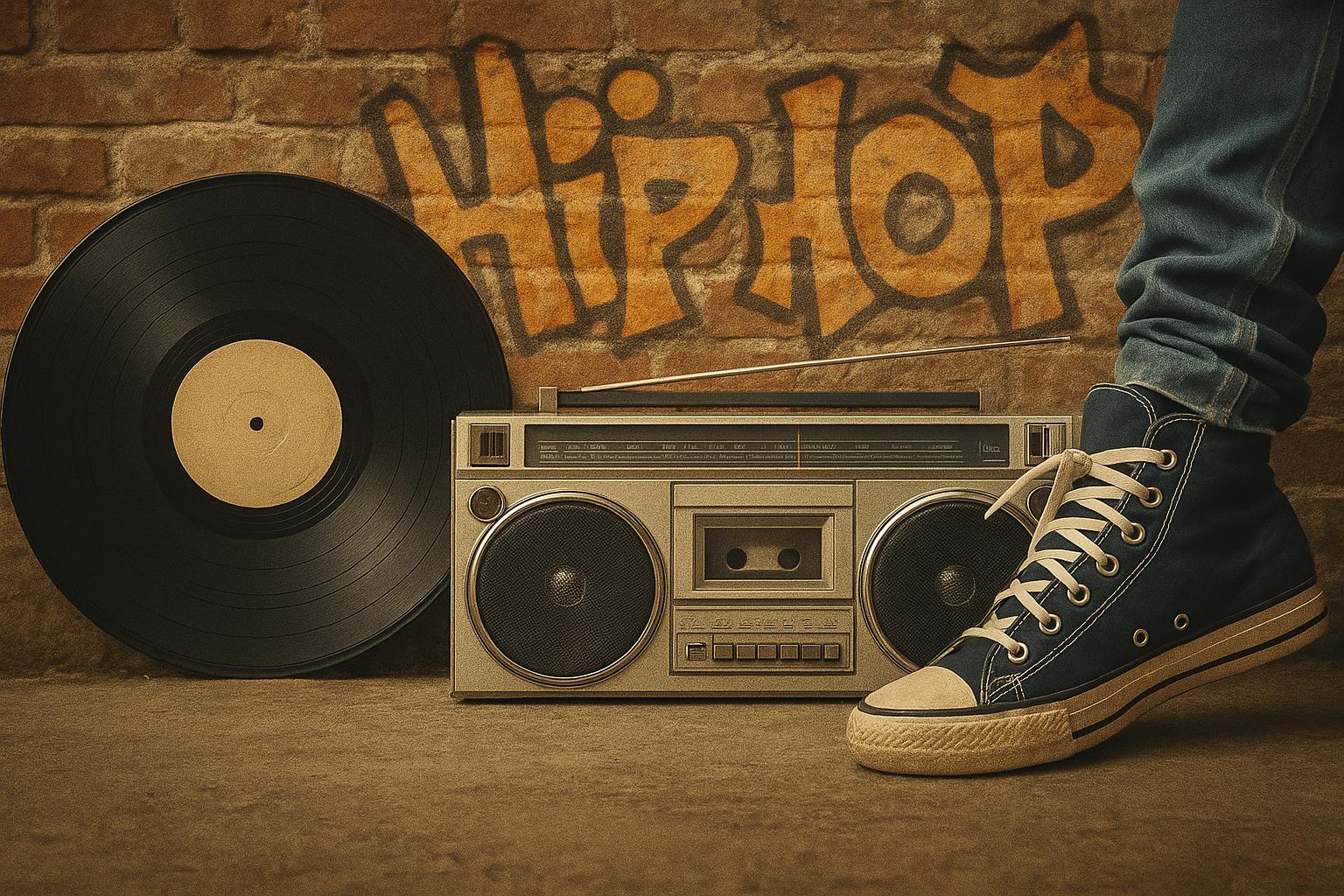
Hip hop is unique among genres of music in that it refers not only to music stylings, chord progressions, and vocal techniques, but to a much broader culture that also includes breakdancing, graffiti, and knowledge. The other pillars of hip hop include MCing, which may include rapping or singing, and DJing.
While the origins of hip hop are typically thought to be found in New York City during the late 1960s and early 1970s, several genres of music and social movements influenced the early days of the culture. Musically, the early originators of hip hop primarily drew on jazz, funk, soul, gospel, and rhythm and blues, as well as contemporary genres, such as disco. Musicians also borrowed from other avenues of African American culture, including so-called blaxploitation films.
Hip hop has always engaged in a dialogue with black intellectualism and broader social trends throughout the United States and around the world. On this note, early hip hop artists responded to the Civil Rights movement and the Vietnam War, among other social and cultural topics.
Because hip hop is a fairly modern genre of music, historians can trace its roots back to specific locations and moments in time. For example, one of the most important instances in the history of hip hop took place on August 11, 1973, at 1520 Sedgwick Avenue in the Bronx. DJ Kool Herc, along with his sister Cindy Campbell, held a house party at which DJ Kool Herc experimented with “breaking” records, a technique that involved drawing out certain segments in songs that drew more people to the dance floor.
Although hugely influential, DJ Kool Herc certainly did not “invent” hip hop, nor did any one individual or group. Kurtis Blow, who DJ’d his first party at the age of 13 without the aid of turntables, drew on the rhythm, stylings, and fashion of James Brown while recording his iconic track “The Breaks,” which he used to teach people about hip hop beyond the confines of Harlem house parties. In 1979, Blow became the first rapper to sign a major record label deal, later releasing the song “Christmas Rappin.'”
That same year, The Sugar Hill Gang released “Rapper’s Delight,” one of the first hip hop recordings to chart among the top 40 singles in the US. The genre developed rapidly from that point, with major milestones ranging from the launch of the national television program Yo! MTV Raps in 1987 to Salt-N-Pepa winning a 1989 Grammy for Rap Performance, the first female rap group to win the award.
Since the genre’s Harlem house party origins, hip hop has spawned countless subgenres, including boom bap, gangsta rap, g-funk, and trap. The genre has also merged with other so-called mainstream styles of music in the form of rap rock and rap pop. The 1986 “Walk This Way” collaboration between the rock band Aerosmith and Run-D.M.C catapulted the latter to wider success, while revitalizing the former’s career.
Numerous hip hop artists have released albums that have sold millions of copies around the world. The most successful hip hop and rap albums of all time include The Fugees’ The Score, The Notorious B.I.G.’s Life After Death, and Speakerboxxx/The Love Below by OutKast, which has sold more than 13 million copies.
About Simone Monasebian
Simone Monasebian is an attorney and senior administrator with more than three decades of experience in criminal justice, international law, and human rights. She has served as a criminal defense attorney, prosecutor, principal defender, and legal analyst, including roles with the United Nations International Criminal Tribunal for Rwanda and the Special Court for Sierra Leone. Currently, she is the Chief Program Officer for Sanctuary for Families, where she oversees programs supporting survivors of gender based violence. Earlier in her career, she worked as a journalist covering hip hop culture for a national audience, an experience that continues to inform her analytical approach to culture and society.
